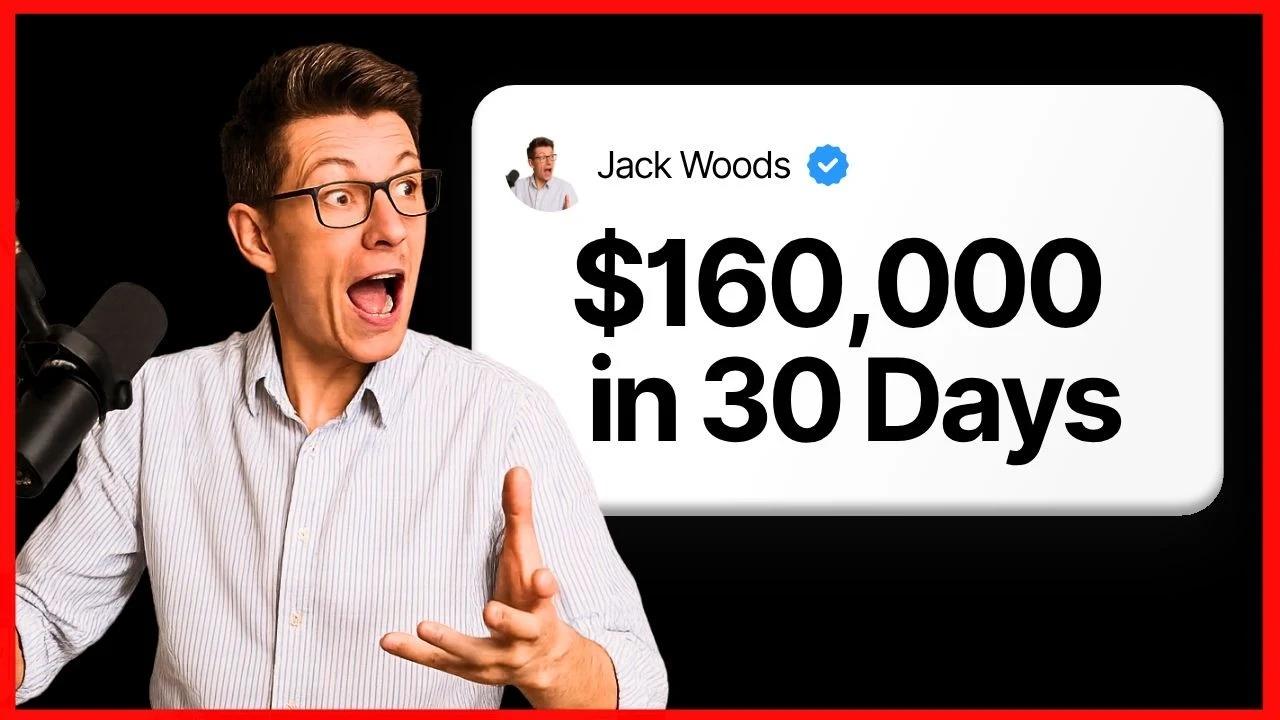
$20K/mo signed
Lexi Williams
Had been copywriting for 6 years at about $5K a month. In 30 days she signed $20K a month in new clients.
$4K one month, $1K the next, then an $8K month that convinces you you've cracked it, right before the next plunge.
The fix is a couple of clients who pay you properly every month, and a mentor who still does the job showing you how to land them.
Sean Ferres has 4.8 out of 5 on Trustpilot from 113 reviews, and 94% of them are five-star. Read them on Trustpilot.
Updated 24 November 2026
Real students, real numbers
Went from $300 advertorials to a 10% performance deal. He had a $130,000 month, and makes $50K to $60K a month from one client.
Read the Q&A →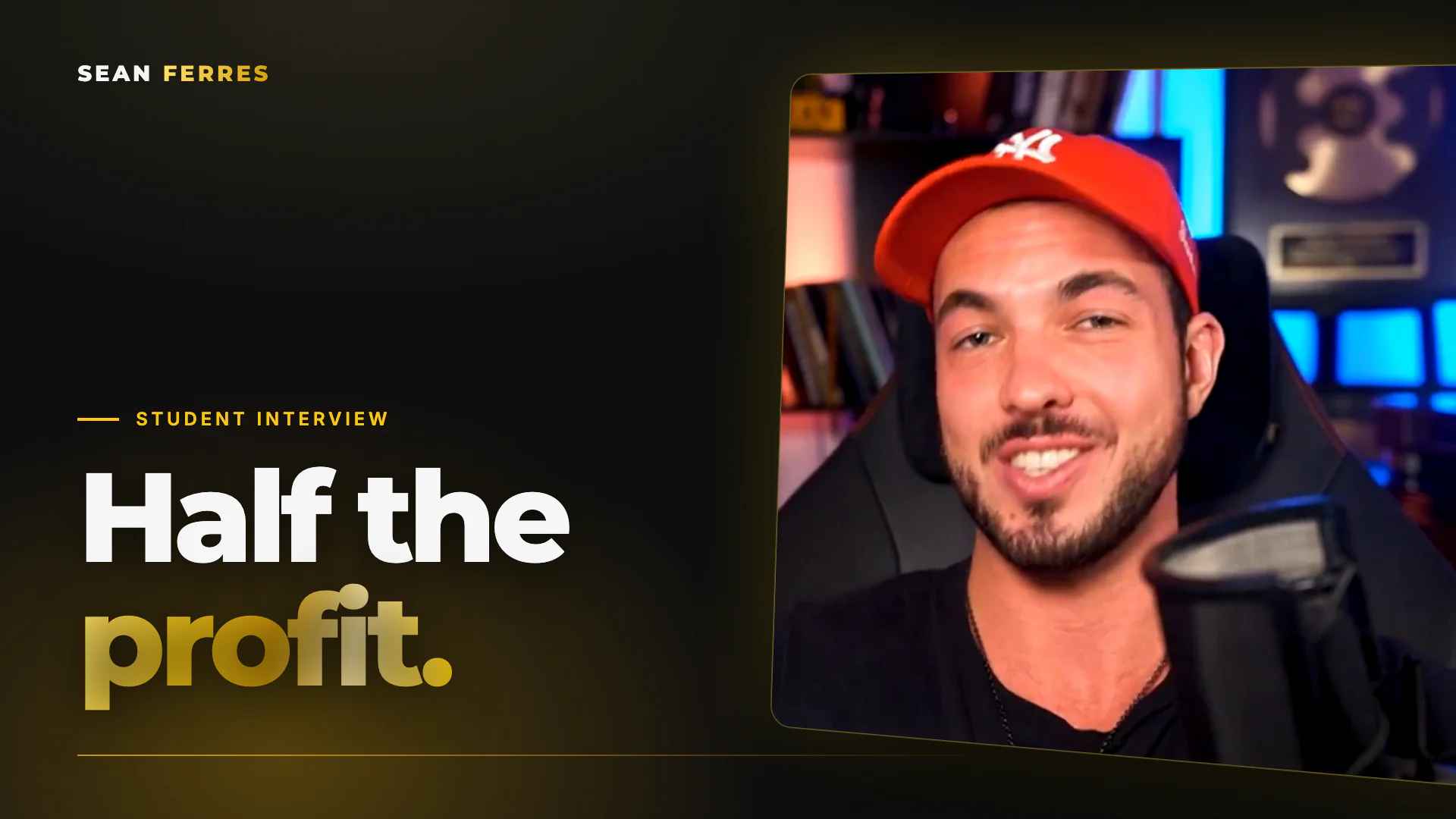
Went from about $1,500 a month to $10K in 10 days, then scaled one client to seven figures a year in take-home on a profit share.
Read the Q&A →Had been copywriting for 6 years at about $5K a month. In 30 days she signed $20K a month in new clients.
Built to $10K a month on the side of her Dow Jones job, then went full-time on it. Her favourite perk: "Now I can approve my own time off."
These are some of our best results, not typical ones. What you make depends on your skills, your effort and the market. Every result
You know the email.
“Hey, we’re pausing marketing spend for a bit, will reach back out in Q2 :)”
It’s polite, it’s friendly, it signs off with a smiley face, and it just deleted your month.
Somewhere, a heart monitor goes beeeeeeeeep.
One good client was propping up the whole thing, and now your Stripe has flatlined right along with them.
If one smiley face can delete your month, your pipeline is held together with Blu Tack and hope.
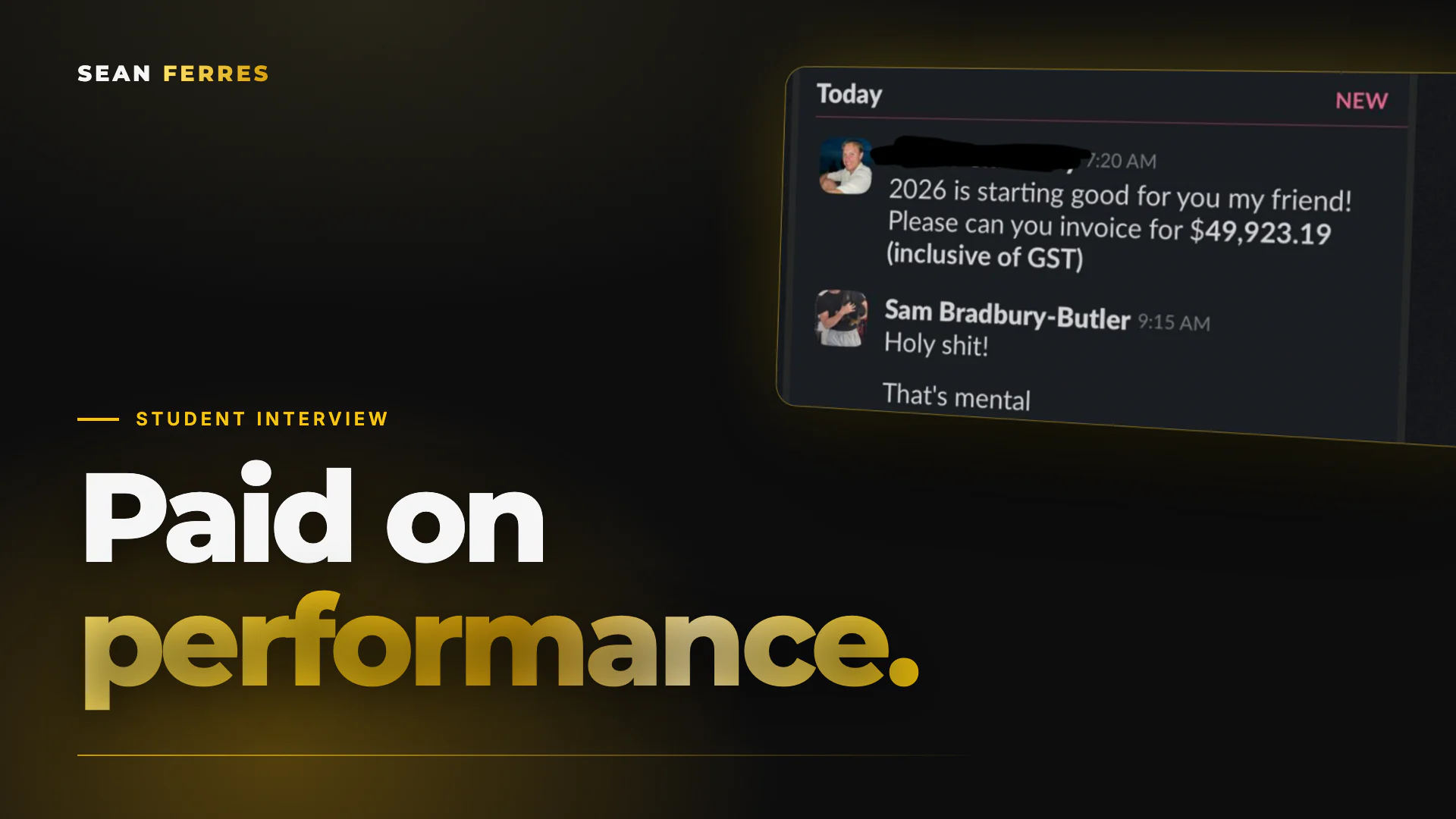
Sam Bradbury-Butler fixed his pipeline by going deep on one client and asking for a cut of the profit. He came in at about AUD $15K a month, moved to a 10% profit share, and now makes $50K to $60K a month from that one client.
In September 2026 the invoice was $54,381.58, which is the kind of number you stare at until you’ve checked where the decimal point went.
 September’s invoice request, from the client’s side. The client ASKED him to send the bill, which in freelance terms is roughly as common as a unicorn doing your tax return.
Freelancers who are good and paid like they aren’t.
You’ve landed clients before, maybe a few, but none of them stick and none of them pay what you’re worth, so every month opens with a small prayer to the invoice gods.
The dream, for most freelancers I talk to, is gloriously dull: a couple of solid clients, and knowing exactly what’s going to hit your account on the 15th. A boring, predictable bank balance is far sexier than anything with a spoiler on it, and it never needs a service.
It’s also for the marketing pro who has the skills to do this and a boss who signs off their annual leave. You’ve written the briefs, you’ve watched the agency take the credit in the meeting, and you’d like to find out what your judgment is worth when you sell it directly.
(Your boss would hate this idea. Maybe don’t bring it up at your next one-on-one.)
You’ll lock in a niche and a position that sounds like a strategist, so brands stop pricing you like a word vendor at a farmers market.
You’ll learn to make the ads brands are desperate for, with a method I call IMPACT: Intel on the buyer, a Map of the angles, the Pen (hooks and scripts), the Assets, the Campaign launch, then Test and scale.
And you’ll build the client-getting machine most programs leave as an afterthought, somewhere after the bonus module on morning routines.
It has three moving parts, and none of them is a 200-DM grind.
First, Reverse Outreach: you reply to the marketing emails brands already send you, so the conversation starts warm, in their inbox, with their own words on the screen.
Second, a small attraction offer, like beating their best-performing ad or they don’t pay, which founders tend to screenshot and forward to their business partner.
Third, once they trust you, the retainer.
Every week your work gets reviewed by name on live calls, in a room of people at your level doing the same work. It’s accountability with a pulse, and a lot friendlier than your mum asking how “the freelancing thing” is going at Christmas.
Because I still do this with my own money, which keeps me honest and occasionally humble.
The short version of the CV: direct response since 2017, about $7 million in sales off my own offers, mostly from Facebook ads, and CMB (Copy Millions Blueprint) since September 2018, built to teach the client-getting side. 88 students have cracked six, seven, or even eight figures a year along the way.
On Trustpilot the program holds 4.8 out of 5 from 113 reviews, 94% five-star. In CMB’s history there’s been one legit bad review from a student, answered point by point.
Holly’s review calls it “super hands-on” and says it “isn’t theoretical classroom learning”, which is the polite way of saying we make you actually do the thing.
But the real reason to pick a mentor is who’s on the team, and mine haven’t retired to a podcast studio.
Sam is one of my coaches, so the person reviewing your offer is the same person sending five-figure invoices off a profit share. It’s hard to argue with feedback from a man whose client asks him for the bill.
The one where someone who still does the job tears into your work every week, and getting clients gets as much airtime as writing.
Add named students with dated results and a guarantee with clear conditions, and the shortlist fits on the back of a beer coaster.
When you compare, ask what the mentor sold last month and how much of the program is about getting clients. Ask what week 3 looks like. Ask what happens if you do the work and it doesn’t pay off.
If they answer with a Marcus Aurelius quote, you’ve got your answer.
Masterminds with a big name at the front can be brilliant once you’re already winning, and a very expensive selfie opportunity if you aren’t.
For the bigger comparison, I’ve written about choosing a copywriting coach and whether a copywriting course is enough.
They sell a measurable result to a brand that can afford it, with a specific offer, then turn the first small win into a monthly retainer.
Clever cold emails help, but what you’re selling and who you’re selling it to set the price, and no amount of wordplay squeezes a retainer out of a brand with no budget.
Sell something with a scoreboard. An email sequence vanishes into a dashboard you’ll never see, so at renewal the client remembers you the way you remember a waiter: vaguely, fondly, and not enough to tip.
Ads come with a cost and a return stapled to them, which is why brands pay ad people on retainer and sometimes slip them a slice of the spend.
Pitch with an idea and leave the CV in the drawer. A founder with real ad spend cares about your portfolio about as much as he cares about your star sign.
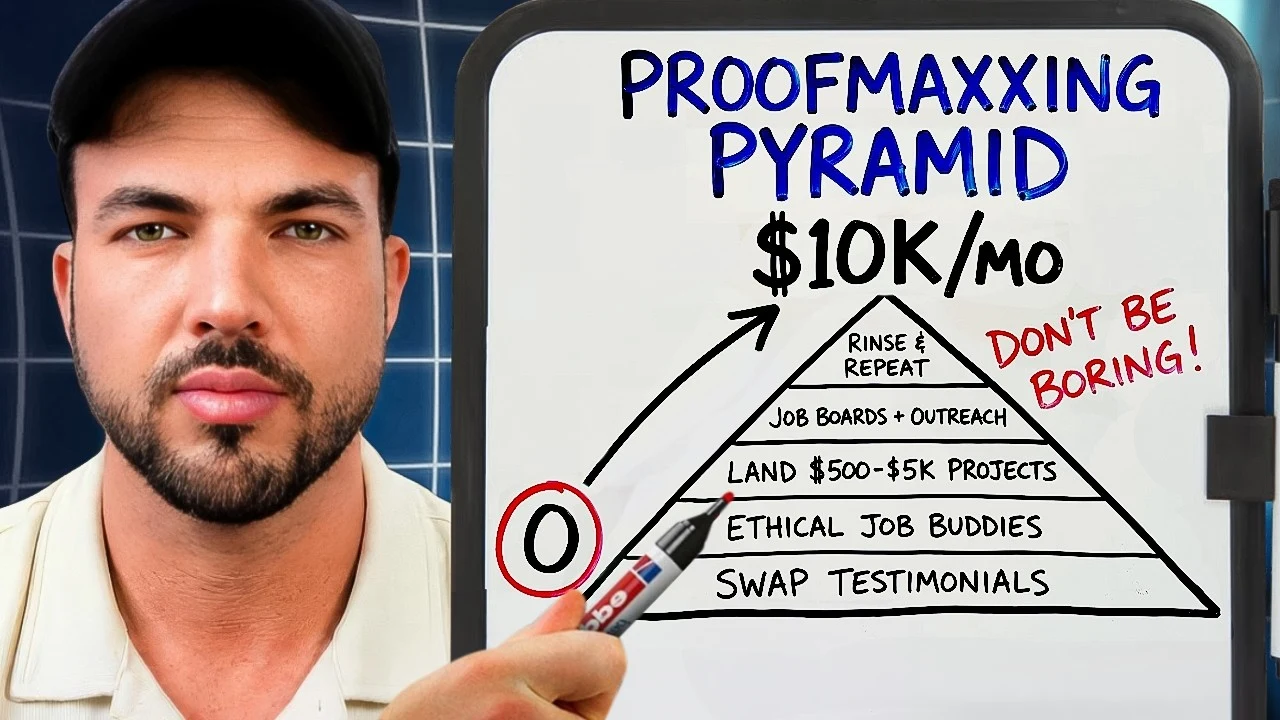
Point at one gap in his ads and you’ve got him, and I break down how to build proof from zero in the proofmaxxing pyramid.
Start small, then upgrade. A small paid project the client already knows they need gets you in the door, and when it works, the retainer conversation mostly runs itself.
How to run those calls without sounding desperate is in turning replies into booked calls.
Then charge like it matters, which is where most freelancers fall apart.
They say their price like it’s a swear word at a christening.
Then they knock 30% off before anyone in the pew has even reacted.
Then they throw in a free landing page, two rounds of revisions and a kidney.
Say the number. Then stop talking.
My students said the bigger number anyway, and lived. If raising your price makes you feel sick, read how to double your freelance rates before your next proposal.
Creative strategy on Meta ads runs $5K to $12K a month per brand, for whoever can carry the work from the research doc to the results call. The bigger the brand’s ad spend and the more ads they test, the higher it climbs.
And no, the founder won’t faint when you say it. He’s paid an agency more for less.
And the base is only half of it. The deal shape is where the zeros start breeding.
Sam has since had a $130,000 month, and the full story of that deal is worth your evening and probably a second glass.
Most freelancers never even ask for a structure like that, mostly because no one ever told them they were allowed to.
You’re allowed. Go ask.
A course if you’re brand new and need the fundamentals, a mentorship if you can do the work and can’t keep clients coming, and a mastermind once you’re already winning and want to scale.
Buying the wrong one is how people end up with a password manager full of logins they never use.
If you’re reading this, you’re probably in the middle. You’ve done the course, maybe three of them, and what’s missing is someone looking at your work and telling you what to do this week.
For the ones who outgrow the mentorship, I run a mastermind called The Resistance.
Past retainers there’s the agency route (more staff, more Slack channels, more 11pm “quick question?” messages), and there’s partnering with a client, which I cover in how a freelancer becomes a business partner.
Get the retainers first, and the empire can wait a quarter.
Brand-new writers, first. A mentorship assumes the writing’s already there, and if it isn’t, a course and the free stuff are the cheaper first step. Come back when you’ve got something for me to tear into.
It’s also not for you if you want a mentor to do your outreach for you, or if the thought of dropping your worst client makes you want to lie down in a dark room. And if blunt feedback makes you want to crawl under the desk, we’re in for a rough ten weeks, you and me.
If you’re a skilled freelancer or marketer who wants a couple of clients paying you properly and the confidence to replace one if they leave, that’s exactly who I built it for. Read the reviews, check the results, then apply.
Let’s get that heart monitor beeping like a man asleep in a hammock: steady, predictable and gloriously f*cking boring.
FAQ
The best one gives you a mentor who still does the work, reviews yours by name every week, and treats getting clients as half the job.
Look for named students with dated results and a guarantee with clear conditions, and get suspicious of anything vaguer than that.
My program, CMB 3.0: The Creative Strategist Breakthrough, is built for freelancers who can already write and want steadier, better-paid clients through Meta ads work, plus a resting heart rate when they open Stripe.
They sell a result the client can measure, to a brand that can afford it, with an offer specific enough to say yes to.
In practice that means moving into ad work where your value shows up in the numbers, opening with a small foot-in-the-door project, then upgrading to a monthly retainer, often with a percentage of ad spend or profit on top.
Clever wordplay in the cold email is the parsley on the plate. Looks nice. No one eats it.
For creative strategy on Meta ads, a brand will pay $5K to $12K a month to the person who runs its whole ad loop, from research to results. Past that, the money moves into the deal structure.
Sam Bradbury-Butler's profit share pays him $50K to $60K a month from one client, and he's had a $130,000 month, which is a sentence I never get tired of typing.
If you already have the skill, usually yes. A course gives you information, and information is the one thing you're not short of.
A mentor looks at your actual pitch, your actual ad and your actual pricing, and tells you what to change this week, before the next client email lands with a smiley face at the bottom of it.
A 10-week core with live calls, weekly ad and copy reviews, trainings and templates, then lifetime access.
Roughly in order: lock in a niche and a strategist's positioning, learn to make the ads brands pay for, build your client-getting system, land small foot-in-the-door projects, then turn the best of them into monthly retainers.
It runs in that order on purpose, because a retainer built on no system is a sandcastle at high tide.
Me, on live calls, and a coaching team that still does the job, including Sam Bradbury-Butler, Kenneth Parkja and Ben.
Sam presents what's working in multi-eight-figure ad accounts every week, and he's on a profit share with his own client, so the person telling you your hook wouldn't stop a pigeon has invoices to back the opinion.
While you're building, plan on the 2x2: 2 hours a day learning, 2 hours a day on outreach. I won't pretend that's small. It's roughly the size of a decent Netflix habit, and about as fun to give up.
It shrinks once your systems and AI tools are set up and a couple of retainer clients are in, and plenty of my students fit it around a full-time job at the start.
Yes. Calls are recorded, the outreach happens in blocks you schedule, and a lot of students build the freelance income on the side before they decide anything about the job.
Work out where your 2 hours a day are coming from before you start, because time you plan to "find" stays exactly as lost as your car keys.
No. We teach the ads side from scratch, from digging through customer reviews to reading results in Ads Manager. What makes it faster is already being able to write, or having worked in marketing, because those skills carry straight across.
Sam started out writing $300 advertorials, and the ad side came after, so don't panic if Ads Manager currently looks like a ransom note written in Excel.
You can still land clients. We teach you to pitch with an idea for the brand's own ads, and to build proof step by step with small paid projects.
The attraction offer we teach is simple: promise to beat their best-performing ad or they don't pay. Brands rarely ask for your portfolio after a sentence like that, because you've just taken the risk off their plate and put it on yours.
Some outreach, yes, because clients sadly don't fall from the sky. What we skip is the 200 identical DMs a day.
Reverse Outreach has you join the email lists of brands already running ads, then reply to the emails they send you, so the conversation starts in their inbox with their own marketing.
It's warmer, faster and a lot less soul-destroying than shouting into a stranger's DMs.
Fewer, better clients on retainers. A couple of solid clients paying you properly beats eight flaky ones on $800, for income and for sanity. Then keep upgrading: every time a better client turns up, drop your worst one.
The swinging stops when one client going quiet ruins your morning and leaves the house deposit alone, and the heart monitor settles into a nice, dull beep.
Partly, and that's good news for you. A creative strategist does what a good direct response copywriter always did, plus deciding which ads a brand should run and reading the results.
That last bit is what moves you from charging per word to charging per month.
You already own most of the skill, which is why the switch is quicker than starting over, and why the new title on your LinkedIn ends up doing a lot of heavy lifting.
It's covered on the call, by a human, with your questions answered and your calculator out, and the reason it's off the website is on my FAQ page.
What's already in writing is the $5,000-by-week-10 guarantee, and the "do the work" part of it is doing a lot of lifting on purpose.
Yes. The Resistance is my mastermind, a smaller, higher-touch group for strategy and accountability, offered to students once a year. Get a couple of solid retainer clients first, though.
A mastermind is for scaling what's already working, and it's a very expensive way to find out nothing is.
Skip it if you've never written anything for money, because a mentorship assumes the writing's there, and a course is the cheaper first step.
Skip it if you want a mentor to do your outreach for you, or if dropping your worst client brings you out in hives.
Skilled freelancers and marketers who want steady, well-paid client work and are ready to be told what to fix are exactly who it's for, even when the fix is "the whole hook, mate".
Book a call with my team. If it's a fit, we'll map out your next 10 weeks. If it isn't, we'll tell you straight, no pressure, no "this price expires in 4 minutes".
Keep reading